Exploring the financial heart of London
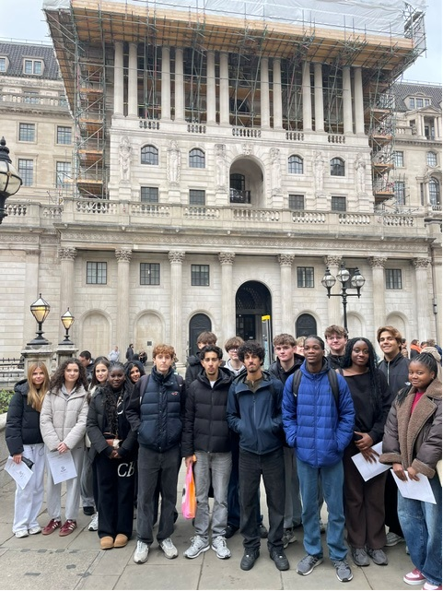
What better way to understand a major financial centre than to experience it first-hand? On 6 November 2026, second-year Economics and Business students swapped their usual classroom surroundings for the streets of the City of London, taking part in a walking tour that brought their studies to life.
The visit explored how London’s financial district has evolved, why it continues to attract businesses and investment from around the world, and the important contribution it makes to the UK economy. Students considered how the concentration of banks, insurers, investment firms and professional services creates economic advantages and reinforces London’s position as a leading international financial centre.
Starting at Moorgate Underground Station, the group explored an area where more than 2,000 years of history meet modern global business. From its Roman origins to the commercial architecture of today, students considered how changes in technology, transport, investment and business needs have shaped the City’s development.
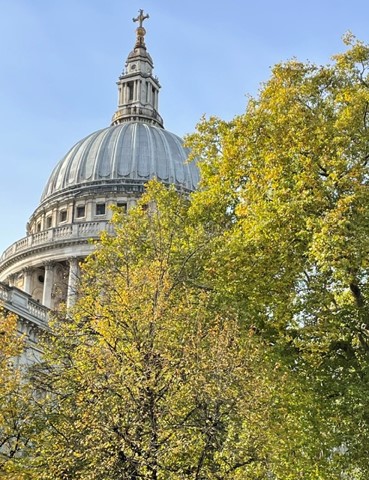
The route included some of London’s most recognisable landmarks, including Guildhall, St Paul’s Cathedral and the Bank of England. Passing the headquarters of major financial institutions prompted discussions about the scale of the industry, the range of career opportunities available and the analytical, technical and professional skills needed to succeed.
The City’s historic street names, including Poultry, Bread Street and Honey Lane, provided an insight into its commercial past and prompted discussion about markets, specialisation and the changing nature of economic activity.
Outside the distinctive Bloomberg headquarters, students explored the importance of information in modern financial markets. Discussions focused on how accurate, timely data influences investment decisions, reduces information asymmetry and supports more efficient markets.
A key stop was Paternoster Square, home to the London Stock Exchange (LSE). Students examined how capital markets connect businesses seeking finance with investors looking for returns, exploring how companies raise capital through shares and how share prices respond to changing expectations. They also considered the wider role of financial markets in supporting business growth, investment and wealth creation.
At the Bank of England Museum, students explored the role of the UK’s central bank in maintaining monetary and financial stability. Exhibits brought classroom discussions about inflation, interest rates and monetary policy to life. A particular highlight was the opportunity to handle one of the approximately 400,000 gold bars held in the Bank’s custody, worth more than £1.3 million at current prices!
The final destination was The Lookout at Broadgate, where panoramic views from the 50th floor provided a fascinating perspective on London’s economic geography. Students considered why financial and professional services firms cluster together, benefiting from access to skilled workers, specialist expertise, infrastructure and business networks.
The views also prompted reflection on London’s future as an international financial centre. Discussions explored how artificial intelligence, digital platforms and changing working practices are transforming the industry, influencing future career opportunities and the skills employers will increasingly value.
Throughout the day, students gained a valuable insight into the breadth of opportunities within banking, investment management, insurance, financial technology, data analysis and consultancy. They also saw how economic theory connects directly to the decisions made by businesses, investors and policymakers.
By the time the group returned to Moorgate, students had experienced far more than a tour of London’s famous landmarks. They had explored the institutions shaping financial markets, seen economic concepts in practice and considered the opportunities and challenges facing one of Britain’s most important industries.
Most importantly, the visit demonstrated that economics and business is all around us. Sometimes, the best way to understand the financial world is to step outside the classroom and experience it first-hand.
Anthony Duffy – Teacher of Economics